Getting there and around
Tauranga has a small airport with domestic flights from Auckland, Wellington, and Christchurch, while Rotorua Airport offers similar connections a little further inland. By road, Tauranga is roughly a 3-hour drive from Auckland via SH2, and InterCity coaches run regularly along the same route as well as between Tauranga and Rotorua, about an hour away.
A hire car makes the most of the Bay of Plenty’s spread-out coastline, from Mount Maunganui to Whakatāne, though Tauranga’s local bus network covers the main urban areas reasonably well for those staying put. If Whakaari/White Island tours or the eastern beaches are on the itinerary, a car is essentially essential, as public transport thins out quickly outside the main towns.
Overview
The Bay of Plenty stretches along the eastern coast of the central North Island, earning its name from the extraordinary abundance early Māori found here — rich fishing grounds, fertile soils, and a warm, sun-drenched climate that made it one of the most densely populated areas of pre-European New Zealand.
Today it remains one of New Zealand’s most popular domestic holiday destinations, anchored by the twin cities of Tauranga and Mount Maunganui. The iconic ‘Mount’ — the perfectly formed volcanic cone of Mauao — is the region’s defining landmark, rising from the beach and normally drawing hundreds of thousands of walkers a year. Following a severe landslide in January 2026 that tragically claimed six lives, all tracks on Mauao remain closed while remediation work is carried out. Restoration of the summit track network began in May 2026 and is expected to take several months, while the base track is likely to remain closed for closer to a year. Visitors should check current status with Tauranga City Council before planning any walk on Mauao.
The region is the heart of New Zealand’s kiwifruit industry, and the wide rolling plains inland from the coast are blanketed in orchards. The Bay of Plenty’s mild climate, long beaches, and laid-back beach culture make it the quintessential New Zealand summer escape, with plenty of superb alternatives to Mauao to fill your days.
Top Things to Do in Bay of Plenty
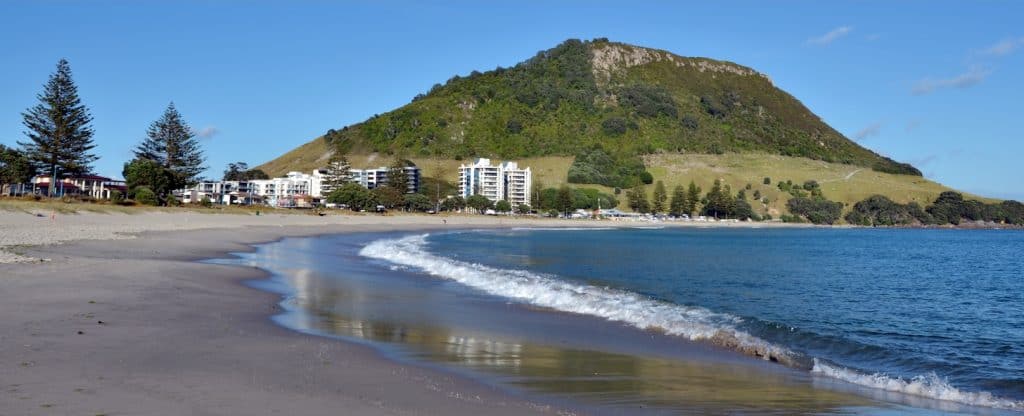
Mount Maunganui Beach
The long, golden beach stretching south from the base of Mauao is one of New Zealand’s finest surf beaches, and while the mountain’s walking tracks remain closed following the January 2026 landslide, the beach itself is open and as beautiful as ever. The surf here is consistent and patrolled by lifeguards through summer. The strip of cafés, boutiques, and restaurants along Pacific Avenue adjacent to the beach has developed into one of the most enjoyable beach-town dining strips in the country — a great reason to linger even without the walk.
Whakatāne & Ōhope Beach
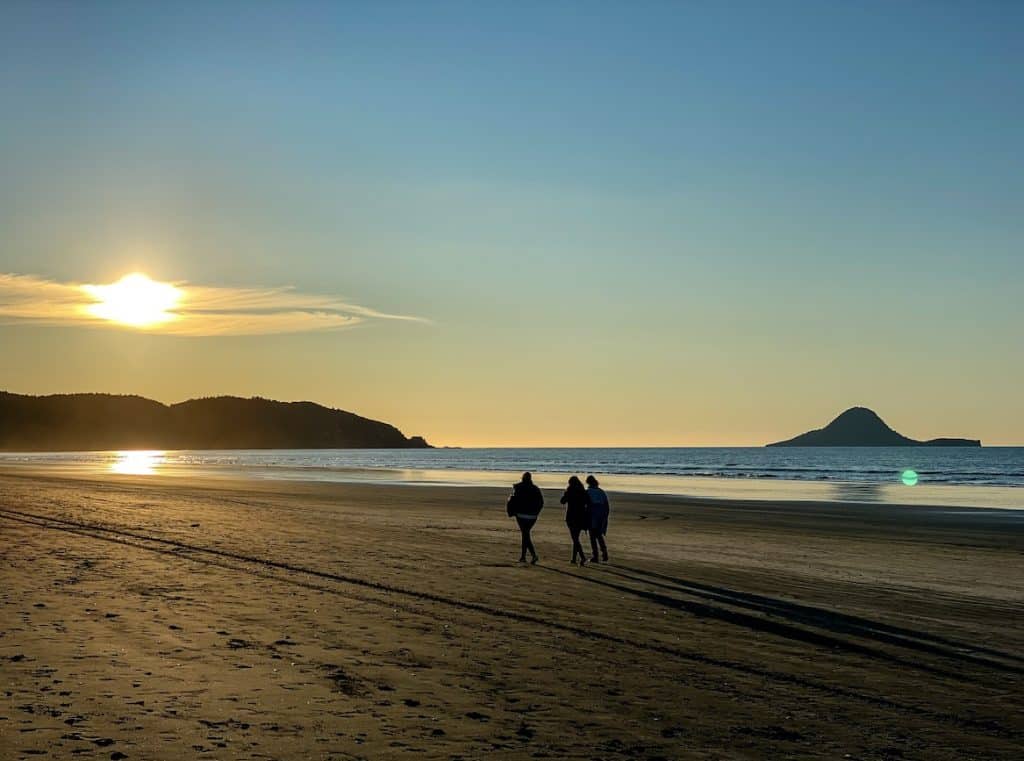
Whakatāne is a sun-soaked coastal town at the eastern end of the Bay of Plenty, widely regarded as the sunniest town in New Zealand. The adjacent Ōhope Beach stretches for over 11km of golden sand backed by rolling pohutukawa-fringed hills, making it one of the best uncrowded beach destinations in the North Island. Whakatāne is also a significant cultural centre for the local Ngāti Awa iwi, with the Wairaka statue and Te Koputu ā-te-Whanga ā Toi library-gallery as key landmarks. Dolphin and sea bird watching cruises from Whakatāne Heads are highly popular.
McLaren Falls Park, Tauranga
One of the Bay of Plenty’s most loved local escapes, McLaren Falls Park sits 15 minutes south of Tauranga city and features a stunning lake, native bush walks, and the photogenic McLaren Falls themselves — a wide, low cascade most impressive after winter rainfall. The park is home to a resident population of Australian black swans and blue pūkeko, and is particularly popular for picnics, swimming in summer, and short family walks. The parkland glows gold in autumn when the exotic trees turn, making it a favourite photographer’s destination from March to May.

Tauranga Historic Village & Elms Mission House
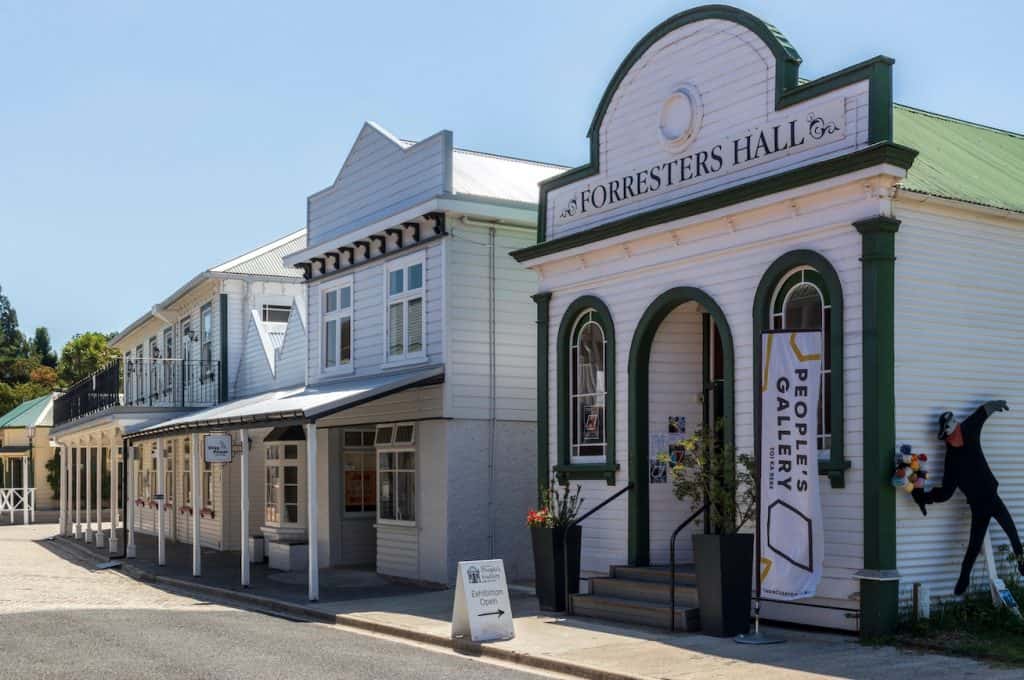
Tauranga has a rich and layered history as one of the earliest European settlements in the Bay of Plenty and a flashpoint of the New Zealand Land Wars. The Historic Village at 17th Avenue houses 40-plus heritage buildings relocated from across the region, including a working steam sawmill and period shops. Nearby, Te Papa-i-Ōūrū (The Elms Mission Station) — a beautifully preserved 1847 mission house set in a tranquil walled garden — is the oldest surviving European building in the Bay of Plenty and a registered New Zealand Historic Place.
Kaimai Mamaku Forest Park & Wairere Falls
The Kaimai Mamaku Forest Park forms the dramatic green backdrop to the Bay of Plenty, rising steeply behind Tauranga and Te Puke. The park’s most accessible highlight is Wairere Falls near Matamata — at 153 metres, the tallest waterfall in the North Island. A well-maintained track through native bush leads to a lookout at the base of the falls in about 45 minutes, or continues to the dramatic clifftop viewpoint above the falls in around two hours. The Kaimāī Summit Walk traversing the range to Katikati is a popular day or overnight option for experienced trampers.

Hot Water Beach & Cathedral Cove, Coromandel
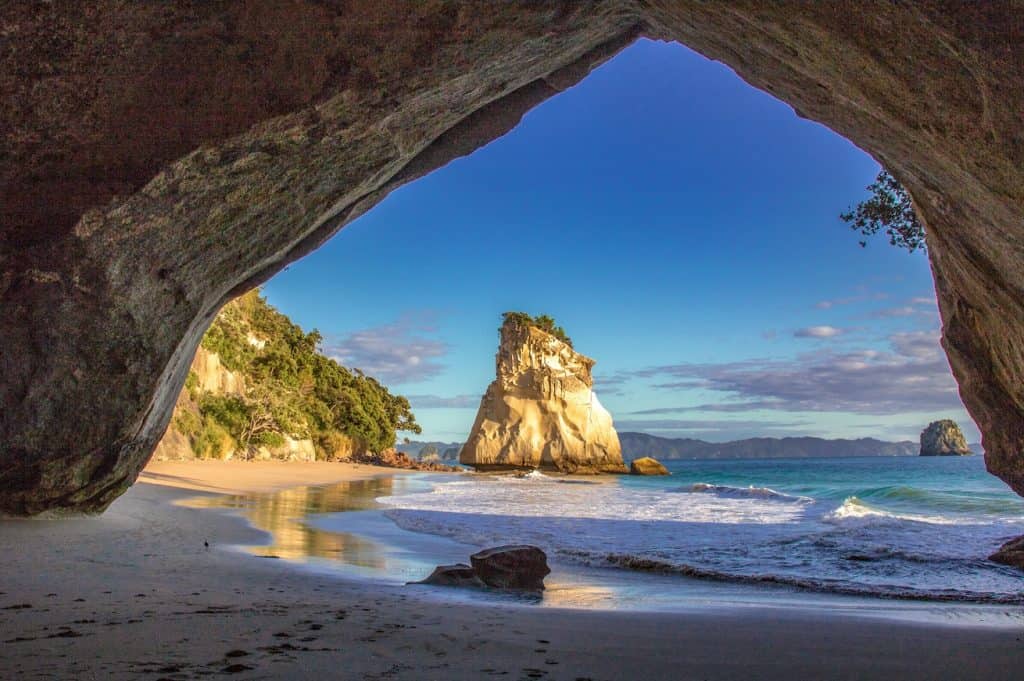
While technically just over the regional boundary into the Waikato’s Coromandel Peninsula, these two iconic destinations are most commonly visited as a day trip from the Bay of Plenty — particularly from Tauranga, which is roughly 90 minutes away. Hot Water Beach allows visitors to dig their own thermal spa pools in the sand at low tide, where geothermal water bubbles up from below the beach. Cathedral Cove, accessible by boat or a 45-minute coastal walk, is a magnificent natural limestone arch opening onto a secluded white-sand beach — one of New Zealand’s most photographed natural landmarks.
Tauranga Harbour & Dolphin Cruises
Tauranga Harbour is one of the largest natural harbours in New Zealand, stretching 20km inland behind Mauao and Matakana Island. Dolphin-watching cruises operate from the Tauranga Bridge Marina, heading out through the harbour entrance to encounter the resident pod of common dolphins that inhabit the Bay of Plenty year-round. The outer harbour and nearby rocky reefs are also excellent for snorkelling and kayaking in summer. Several local operators offer guided kayaking tours through the sheltered inner harbour mangroves and Matakana Island sandspit — a superb introduction to the region’s coastline.


Author: Tripplanner Team
The Tripplanner.nz editorial team, based in Matakana north of Auckland. We write the regional guides and road trips, and add listings for places we think every visitor should know about, alongside the locals who share their own favourite spots here.