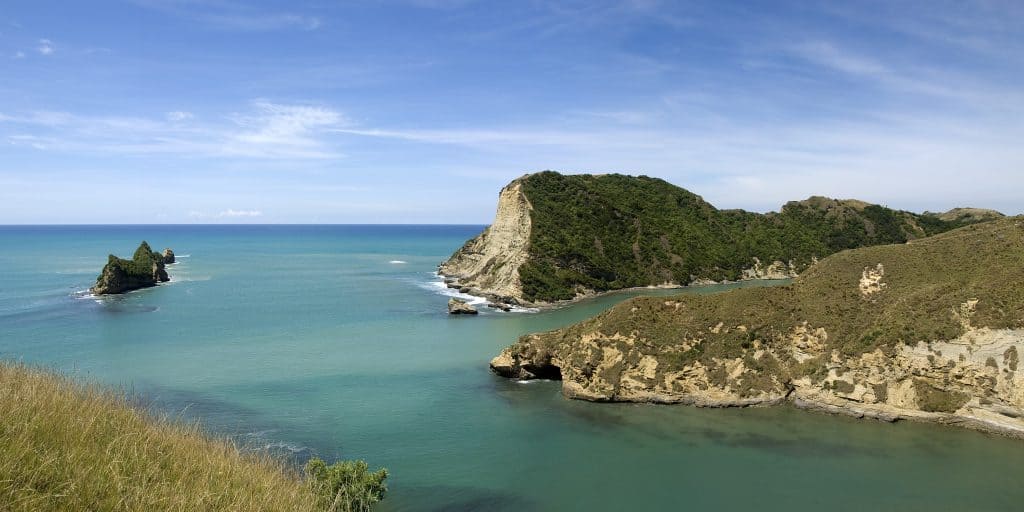
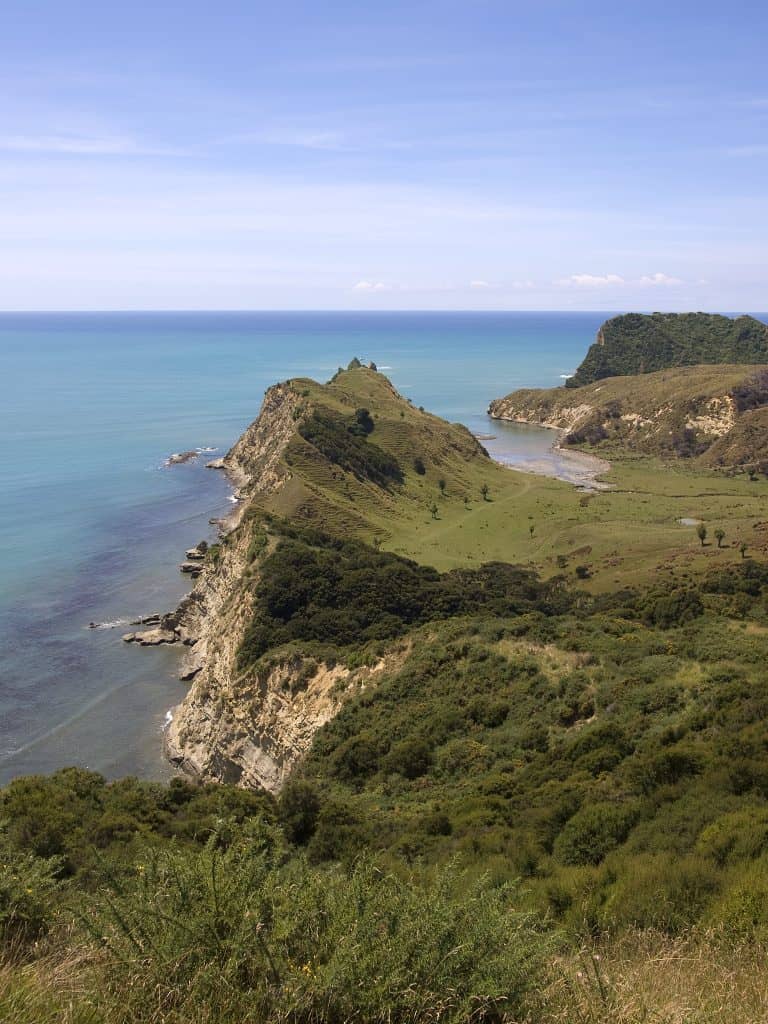
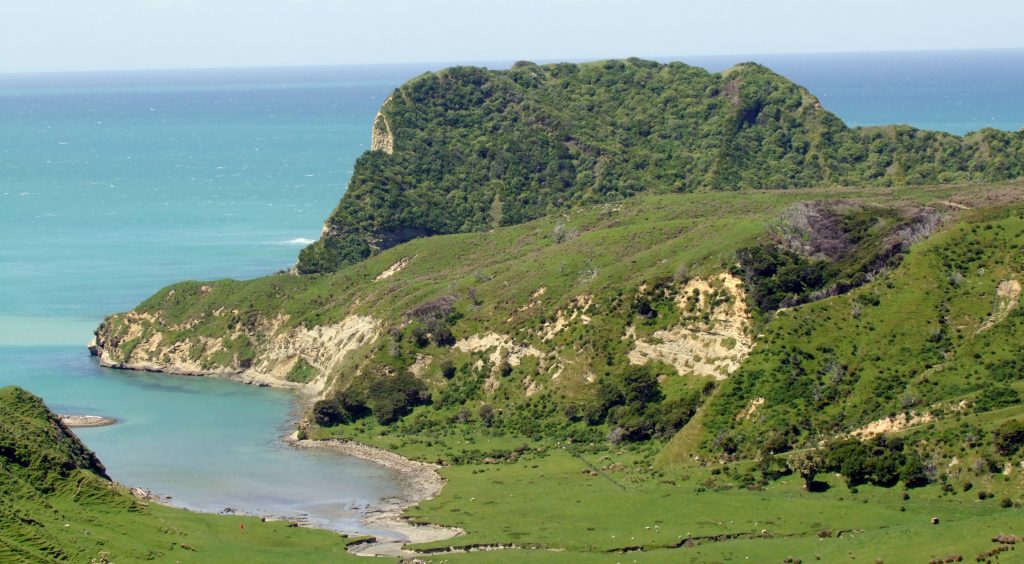
Fifty-odd minutes north of Gisborne on SH35, just past Tolaga Bay township, is one of the East Coast’s best free half-days out: the Cooks Cove Walkway. Turn off at Wharf Road and there’s a small carpark right at the track entrance (a bigger one 200m on, by the motor camp, if that one’s full).
It’s an easy 5.8km return, about two and a half hours if you’re not rushing, climbing up through farmland (real working sheep and cattle paddocks, so mind the gates) and down through regenerating bush to a sheltered cove locals still call Cook’s Cove.
This is where the Endeavour anchored for six days in October 1769 while Cook’s crew took on wood, water and fresh food, and Joseph Banks went botanising ashore — a low-key but genuinely significant first-contact site, with information panels put together jointly by DOC and local iwi Te Aitanga-a-Hauiti, whose ancestors had been fishing and gathering kai here long before any European ship showed up.
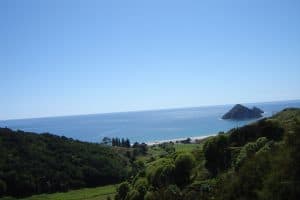
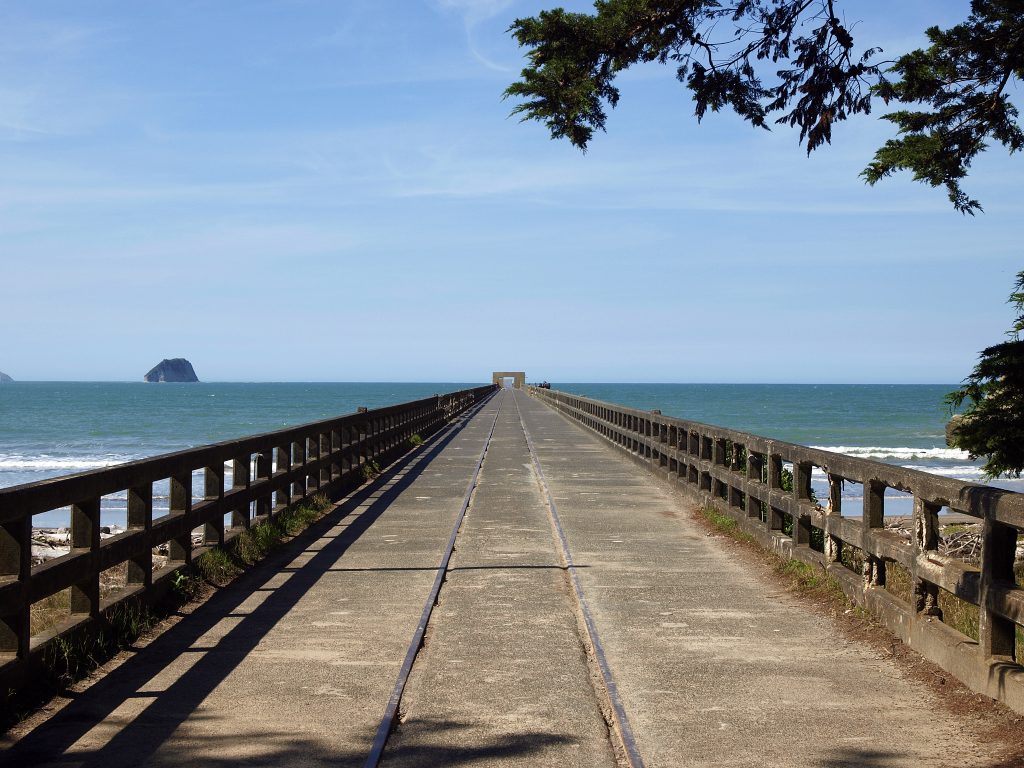
At the cove, look for Te Kotere o te Whenua, the “hole in the wall,” a natural rock arch you can duck through at low tide. Keep climbing to the lookout at about 120m and you’ll get Mitre Rocks and Pourewa Island laid out below you, plus a good look back at the historic 1929 Tolaga Bay Wharf near the trailhead — once the longest concrete wharf in the country, now a striking (if currently storm-damaged) local landmark.
It’s completely free, with toilets near the wharf and cove, but no drinking water on the track, so bring your own. No dogs, mountain bikes, camping or fires. One genuinely useful local tip: it’s a working farm, so the walkway closes every year for lambing, from 1 August until the start of Labour Weekend in late October, so check before you drive out.
Photos: Ulrich Lange and Isderion via Wikimedia Commons.