Getting there and around
New Plymouth Airport has direct domestic flights from Auckland and Wellington, while the drive from Auckland takes around 4.5 hours via SH3. InterCity coaches run from both Auckland and Wellington, though journey times are similar to driving, making flying the faster option for those short on time.
A hire car is by far the easiest way to get around Taranaki, particularly for looping the Surf Highway 45 around the mountain or reaching the region’s gardens and coastal walkways. New Plymouth has a small local bus service for getting around the city itself, but there is minimal public transport linking the wider region’s beaches and rural attractions.
Overview
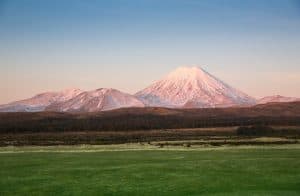
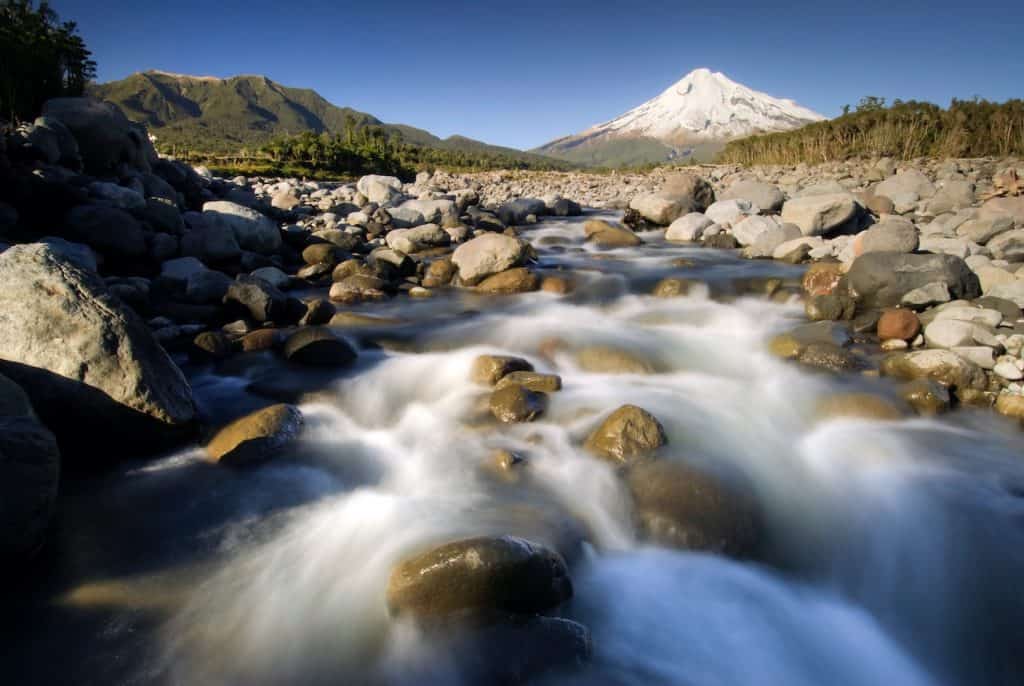
Taranaki is one of New Zealand’s most distinctive regions, dominated entirely by the near-perfect cone of Mount Taranaki (also known as Mount Egmont) — a 2,518-metre stratovolcano that rises sharply from a flat, fertile coastal plain and is visible on a clear day from over 100km away. The mountain is so symmetrical, so cinematic, that it famously doubled for Mount Fuji in the 1983 film The Last Samurai.
Beyond the mountain, Taranaki has built a reputation as an unexpected cultural hotspot. New Plymouth, the region’s main city, has an internationally recognised contemporary art gallery (the Govett-Brewster Art Gallery), one of New Zealand’s finest regional museums (Puke Ariki), and a 13km coastal walkway that’s become a model of urban waterfront design. The city’s biggest international claim to fame is arguably WOMAD — the World of Music, Arts and Dance festival, which New Plymouth hosts each March, drawing some 20,000 visitors and major international acts to the Bowl of Brooklands.
Taranaki’s coastline produces some of the most consistent surf breaks in New Zealand, drawing surfers from around the world to Surf Highway 45. And the region’s volcanic soils have produced a garden culture so extraordinary that the Taranaki Garden Festival draws international visitors. New Plymouth makes for an easy two to three day detour on the route between Auckland and Wellington, and the region richly rewards those who give it the time it deserves.
Top Things to Do in Taranaki
Mount Taranaki National Park
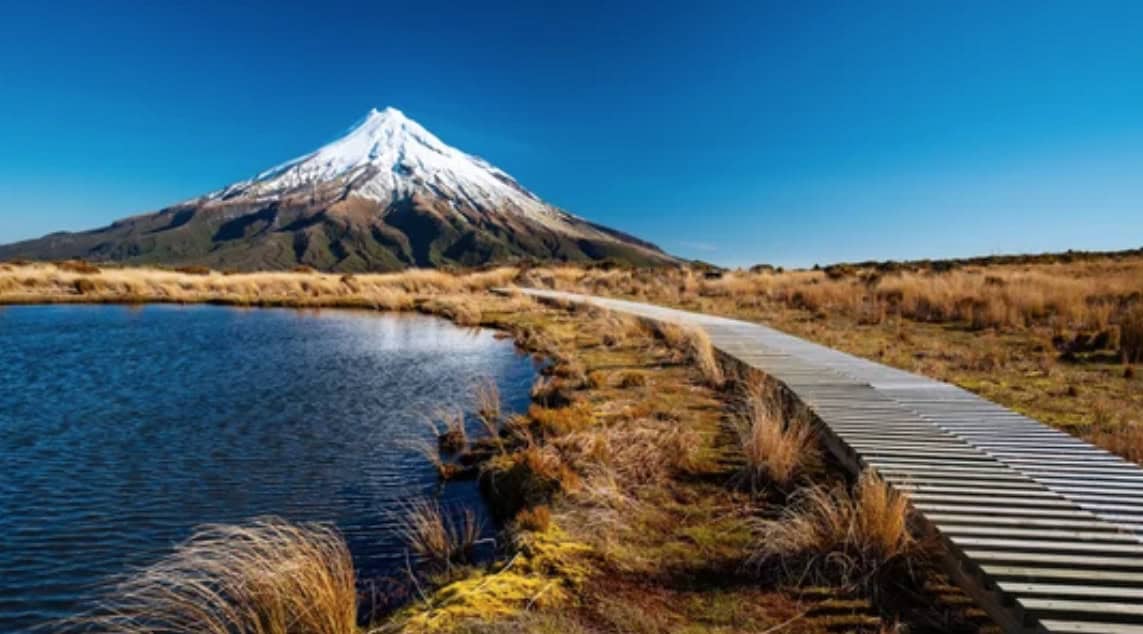
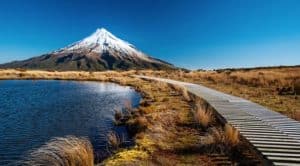
The second most-climbed mountain in New Zealand (after Tongariro), Mount Taranaki offers experiences for every level of walker. The Around-the-Mountain Circuit is a 3–4 day tramp traversing a stunning variety of landscapes from lush rainforest to alpine tussock. The Pouakai Circuit accesses the famous Pouakai Tarns — a shallow alpine tarn that, on a still morning, reflects the perfect cone of the volcano in one of New Zealand’s most photographed images. Guided summit climbs through local operators are recommended for those attempting the top, as the mountain’s weather is notoriously fast-changing.
Govett-Brewster Art Gallery & Len Lye Centre
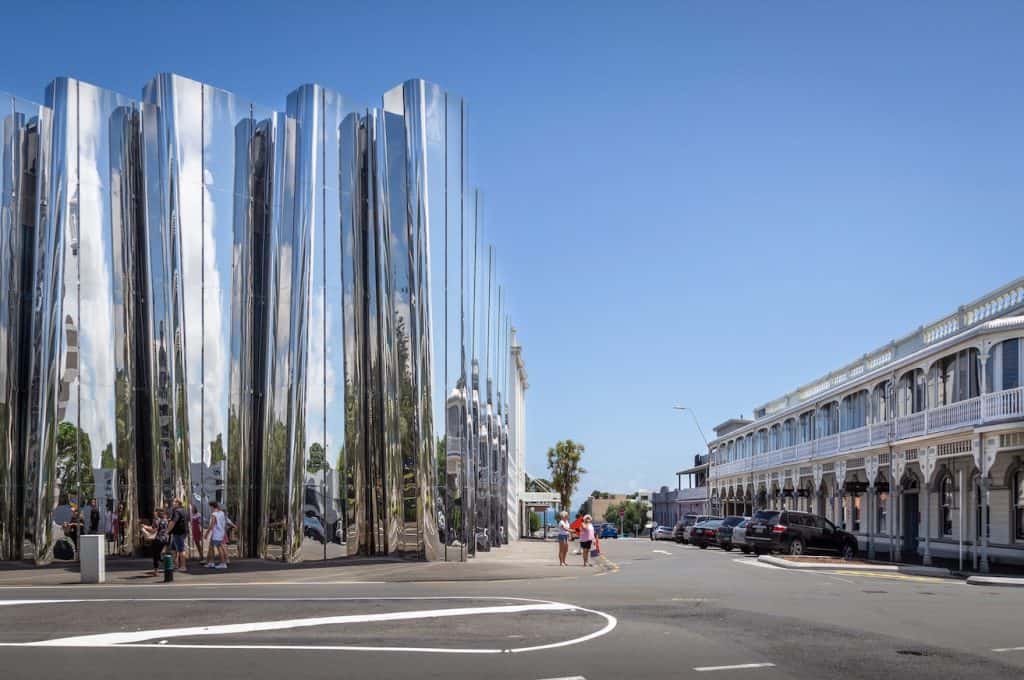
New Plymouth is home to one of the Southern Hemisphere’s most important contemporary art institutions. The Govett-Brewster Art Gallery recently expanded to include the stunning Len Lye Centre, dedicated to the pioneering kinetic artist Len Lye. The centre’s glittering corrugated steel facade has become a landmark of New Plymouth’s revitalised waterfront, and the kinetic sculptures within — including the epic Wind Wand on the seafront — are endlessly fascinating. Admission to the permanent Len Lye collection is free, making it exceptional value.
Surf Highway 45
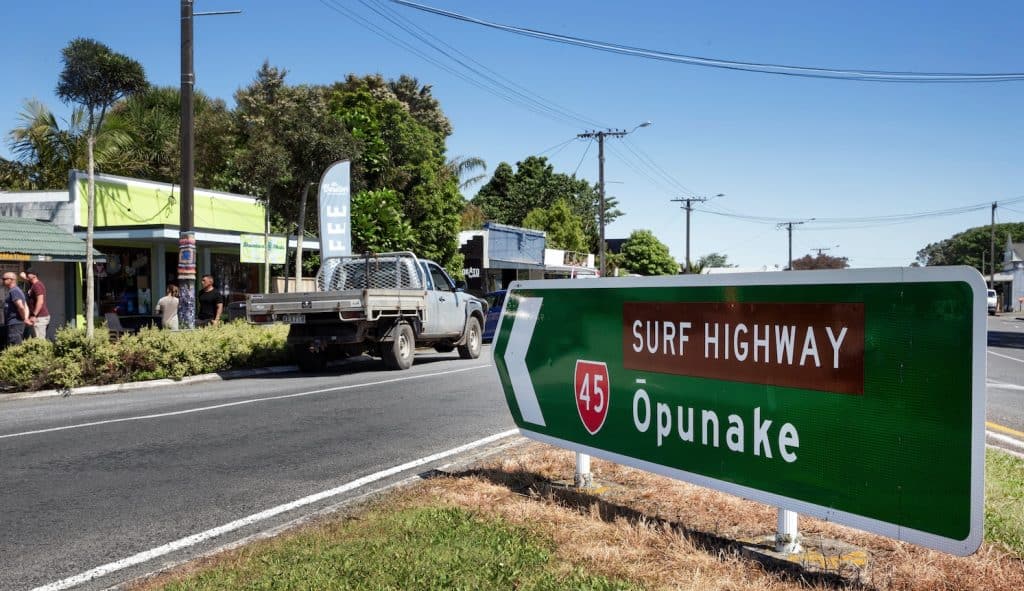
State Highway 45 runs for 105km around the southern coast of Taranaki from New Plymouth to Hawera, passing dozens of surf breaks and dramatic black sand beaches. Breaks at Fitzroy, East End, Stent Road, and Kumara Patch attract surfers from across New Zealand and internationally, generating some of the most consistent swells on the country’s west coast. The Taranaki Surf School in New Plymouth offers introductory lessons for beginners, and board hire is available from several operators along the highway. The drive itself — with the mountain hovering above the coastline on a clear day — is one of New Zealand’s most scenic routes.
New Plymouth Coastal Walkway
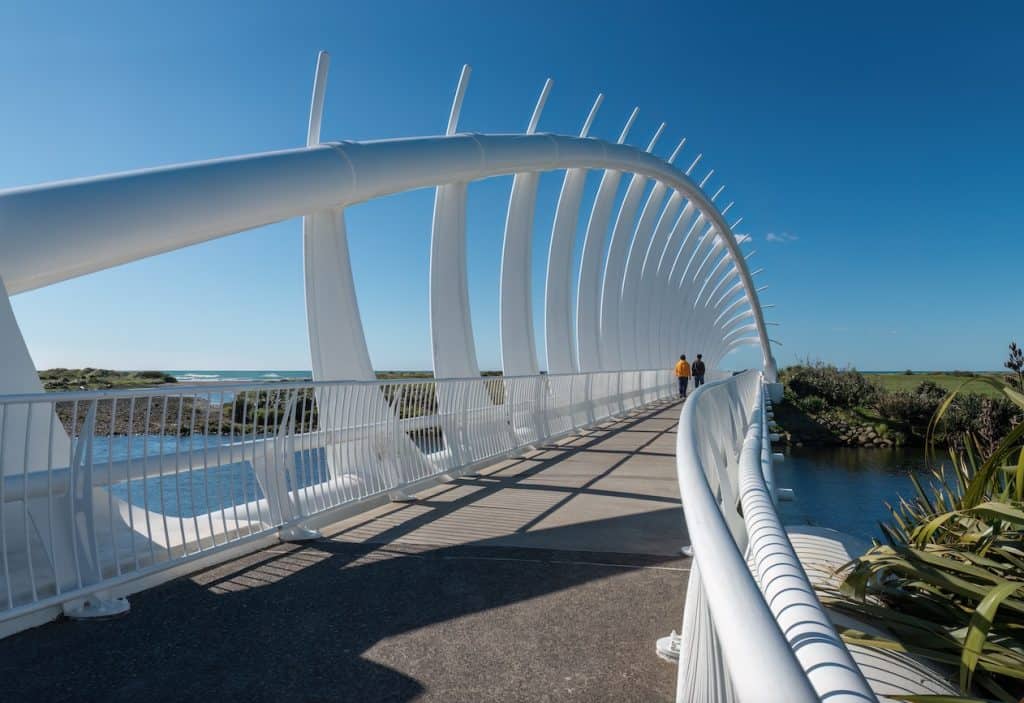
Puke Ariki is a world-class regional museum integrating the New Plymouth Public Library and a heritage centre in a striking building above the harbour. The connected 13km New Plymouth Coastal Walkway — winner of multiple international design awards — links the city from the Waiwhakaiho River mouth to Bell Block along a mostly flat, paved track past wind sculptures, indigenous plantings, and panoramic ocean views. The walkway is excellent for cycling as well as walking and connects to Te Henui Walkway for a longer nature experience inland.
Pouakai Tarns Sunrise Walk
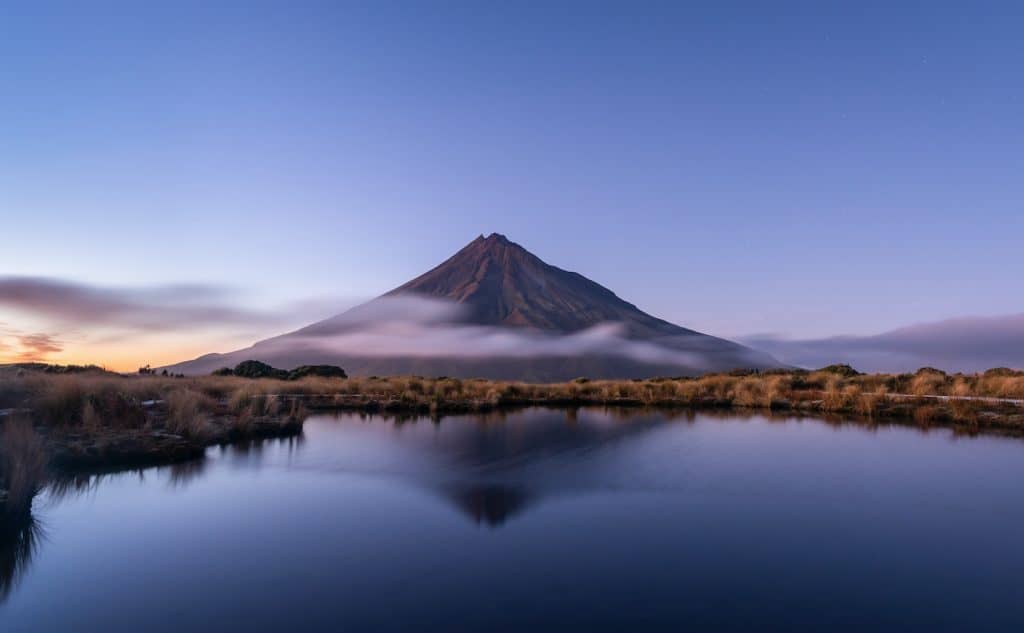
For many visitors, the Pouakai Tarns are the single most memorable experience in Taranaki — and timing the walk to arrive at the tarns at sunrise, when the mountain’s reflection sits perfectly in the still, mirror-like water, is an extraordinary experience. The tarns are reached via the Pouakai Track from Kaitake Road (approximately 3 hours one way), or as an overnight tramp using the Pouakai Hut. The image of Taranaki reflected at dawn has become one of New Zealand’s most reproduced travel photographs and is entirely worth the early alarm.
Paritutu Rock, New Plymouth
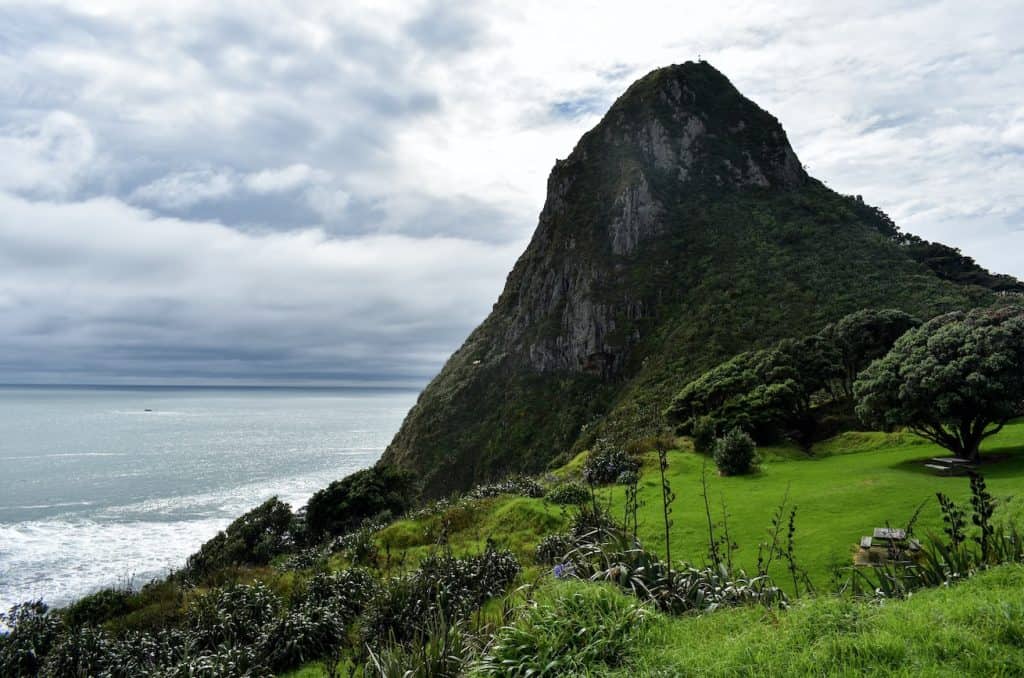
Rising 156 metres from the shoreline at the western edge of New Plymouth, Paritutu is one of the most dramatic natural landmarks on the Taranaki coast — a sheer-sided volcanic plug that demands to be climbed. The ascent is short (around 20 minutes) but genuinely steep, with fixed chains to assist on the upper section where the rock face drops away sharply on all sides. The reward is a vertiginous summit view stretching across the Tasman Sea, along the full sweep of the Taranaki coastline, and — on a clear day — up to the perfect cone of Mount Taranaki hovering above the plains. Paritutu sits alongside the historic Ngāmotu (Sugar Loaf Islands) Marine Reserve, where a colony of New Zealand fur seals hauls out year-round, visible on boat tours from the nearby Port Taranaki breakwater.
Pukeiti Gardens
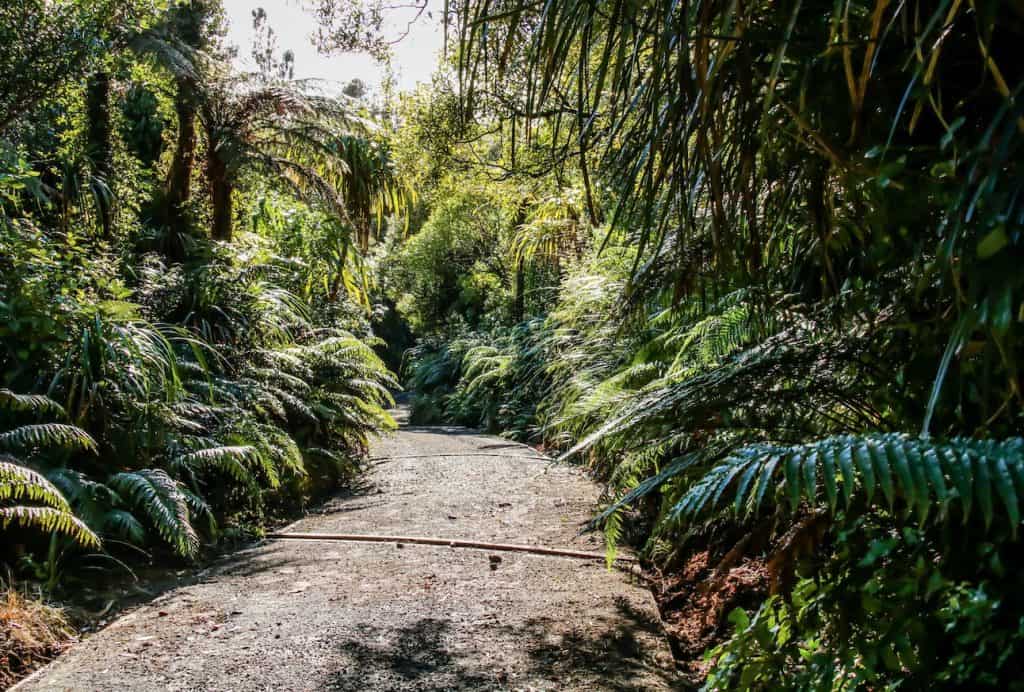
Set 320 metres above sea level in native bush at the foot of Mount Taranaki’s western slopes, Pukeiti is one of the great rhododendron gardens of the Southern Hemisphere — a 360-hectare reserve managed by the Taranaki Regional Council where over 2,000 rhododendron and azalea species and hybrids grow beneath a canopy of ancient rainforest. The main flowering season runs from August through November, when the garden erupts in extraordinary colour — deep purples, crimsons, and creamy whites — against the backdrop of tree ferns and towering rimu. The garden’s bush walks extend into the surrounding native forest, and the views toward the coast on a clear day are outstanding. Pukeiti is a world-class botanical destination that most New Zealanders outside Taranaki have never heard of, which only adds to its appeal.
Dawson Falls
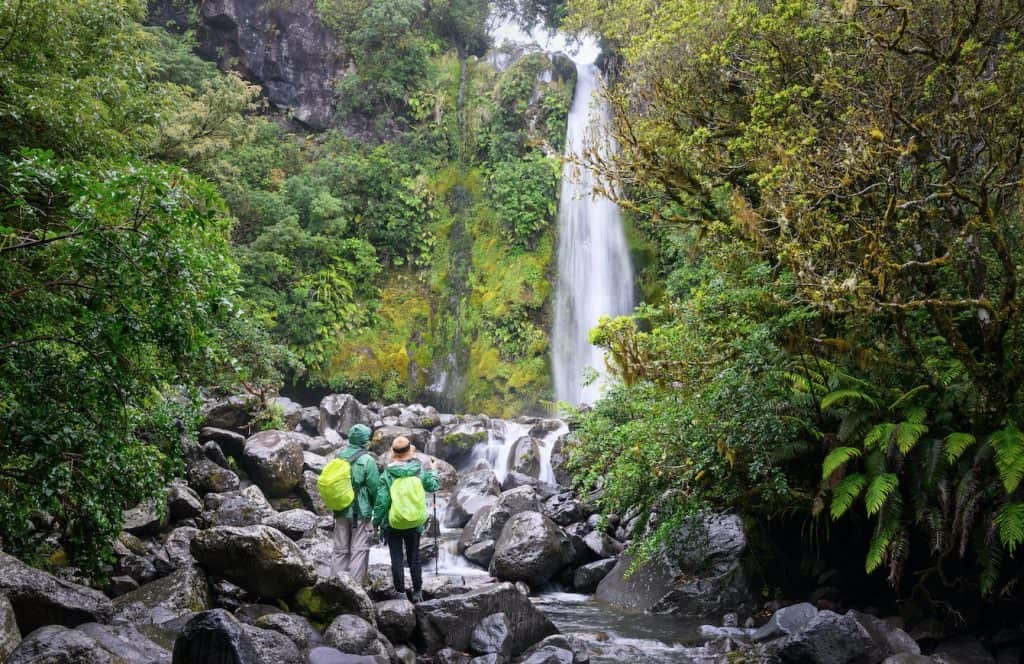
On the southern slopes of Mount Taranaki, a 20-minute walk through ancient podocarp forest leads to Dawson Falls — a powerful 18-metre cascade where the Kapuni Stream drops over a series of andesite lava ledges in a perpetual roar of white water. The walk is well-formed and suitable for most fitness levels, beginning from the Dawson Falls Visitor Centre (the historic Konini Lodge) at 920 metres above sea level. The surrounding forest is among the most pristine on the mountain, with a dense understorey of crown ferns, mosses, and native orchids. The Dawson Falls area also serves as the start point for several excellent longer walks, including the track to the Kapuni Loop and the upper mountain route toward Fanthams Peak — a subsidiary cone at 1,966 metres that offers outstanding views without the full summit commitment.

Author: Tripplanner Team
The Tripplanner.nz editorial team, based in Matakana north of Auckland. We write the regional guides and road trips, and add listings for places we think every visitor should know about, alongside the locals who share their own favourite spots here.