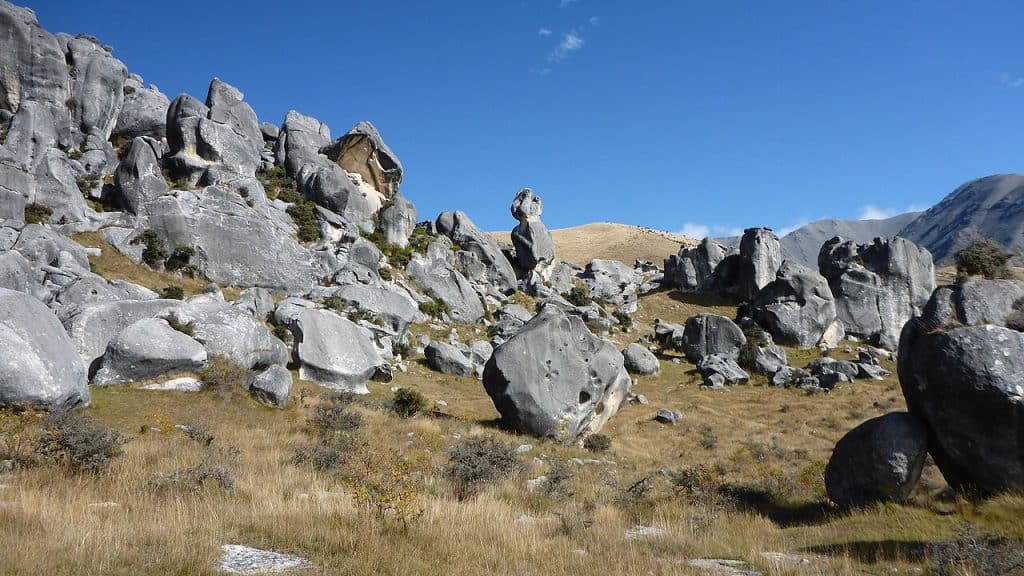
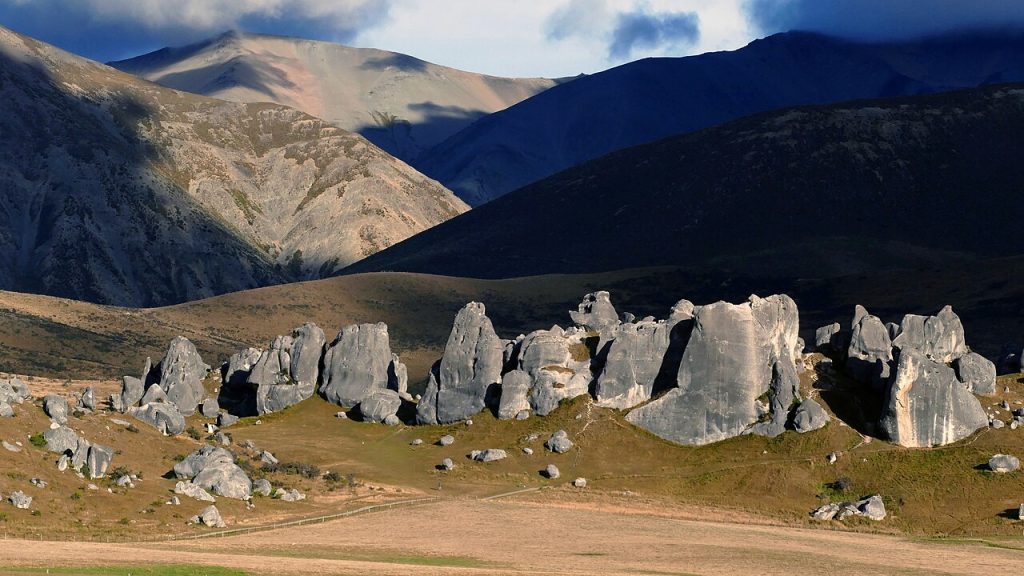
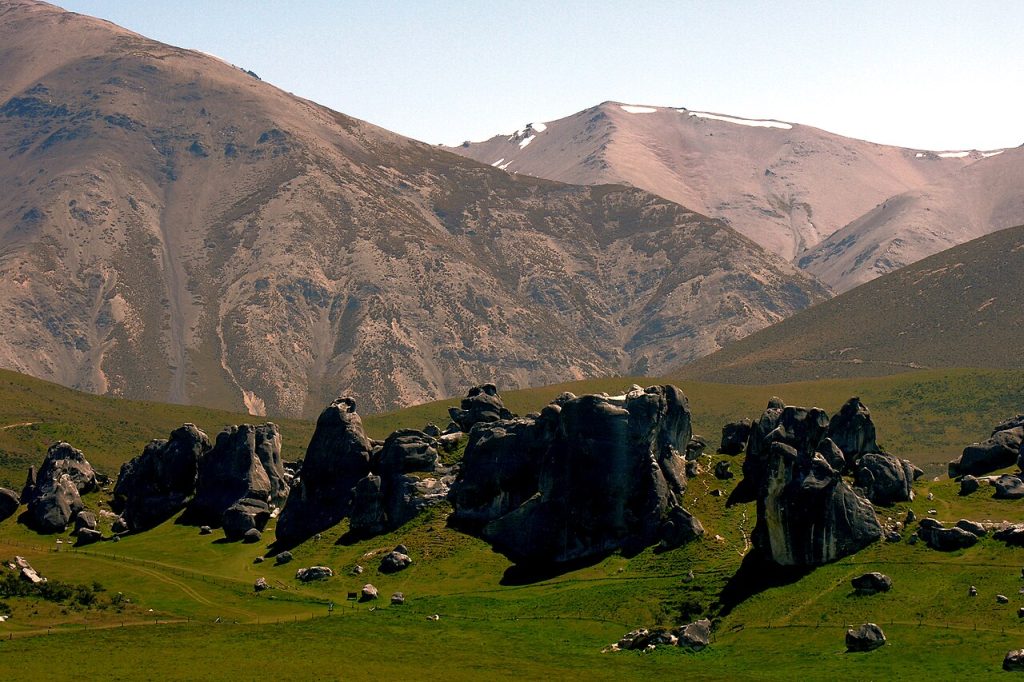
Kura Tāwhiti — Castle Hill to most Cantabrians — is one of those free stops that’s easy to drive past and impossible to forget once you’ve pulled in. About 80 minutes west of Christchurch on SH73 toward Arthur’s Pass, the basin opens up and suddenly there are limestone tors scattered across the tussock like the ruins of, well, a castle — some standing 30 metres tall.
They started out as seabed sediment, thrust upward by tectonic movement around 30 million years ago, then carved by wind and rain into the honeycombed, weathered shapes you see today. Locally quarried limestone from here even went into the front of Christchurch Cathedral.
For Ngāi Tahu the area is Kura Tāwhiti, “the treasure from a distant land,” a name tied to kūmara cultivation and its long use as a mahinga kai stopping point on routes inland. It carries Tōpuni status, meaning the iwi has a formal, active say in how the place is managed — worth knowing as you wander through.
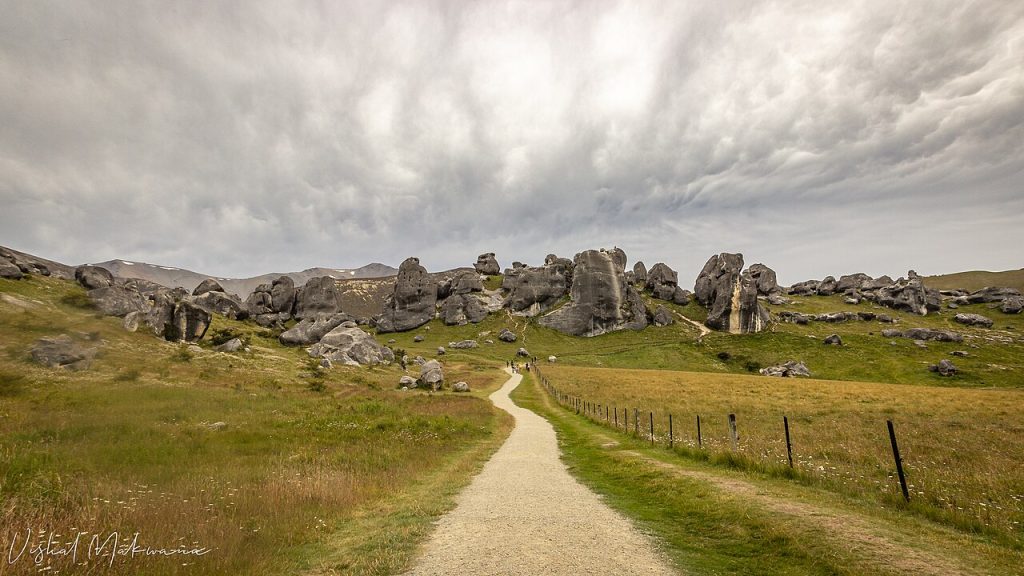
Most people do the easy 40-minute loop track through the tors (gravel, steep in a couple of places, a few steps) with cameras out the whole way, but climbers rate it as some of the best bouldering in the South Island, so don’t be surprised to see crash pads scattered among the rocks on a fine weekend.
Parking’s free for cars and campervans — look for the car park on your left about 3km before the Castle Hill Village turnoff if you’re coming from Christchurch. There’s a toilet and a picnic table, but no dogs, and drones need a permit. Stick to the marked tracks too; the reserve protects genuinely rare plants like the Castle Hill buttercup, down to just a few dozen left in the wild.
Photos: Thomas Booker, Bernard Spragg, Vishal Makwana and Phillip Capper, via Wikimedia Commons.