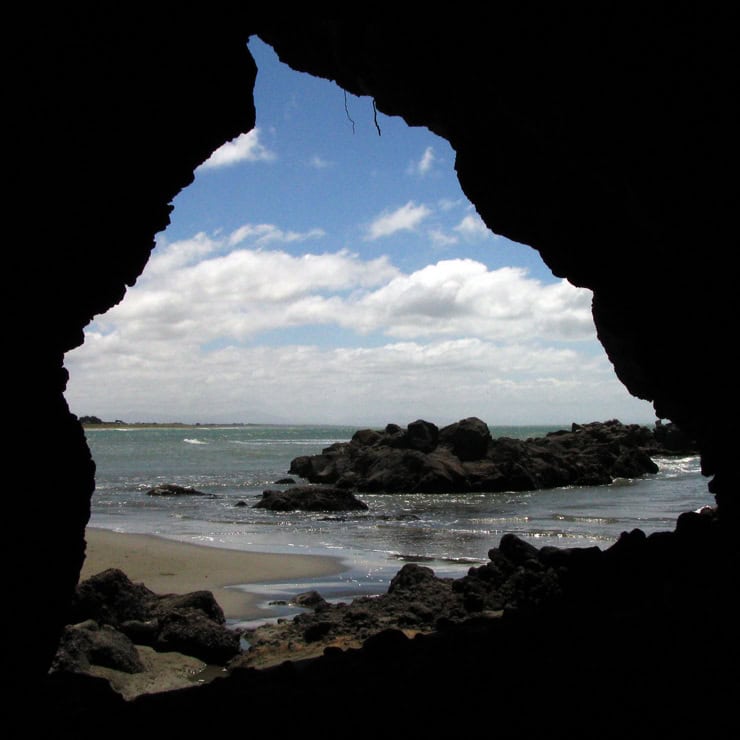
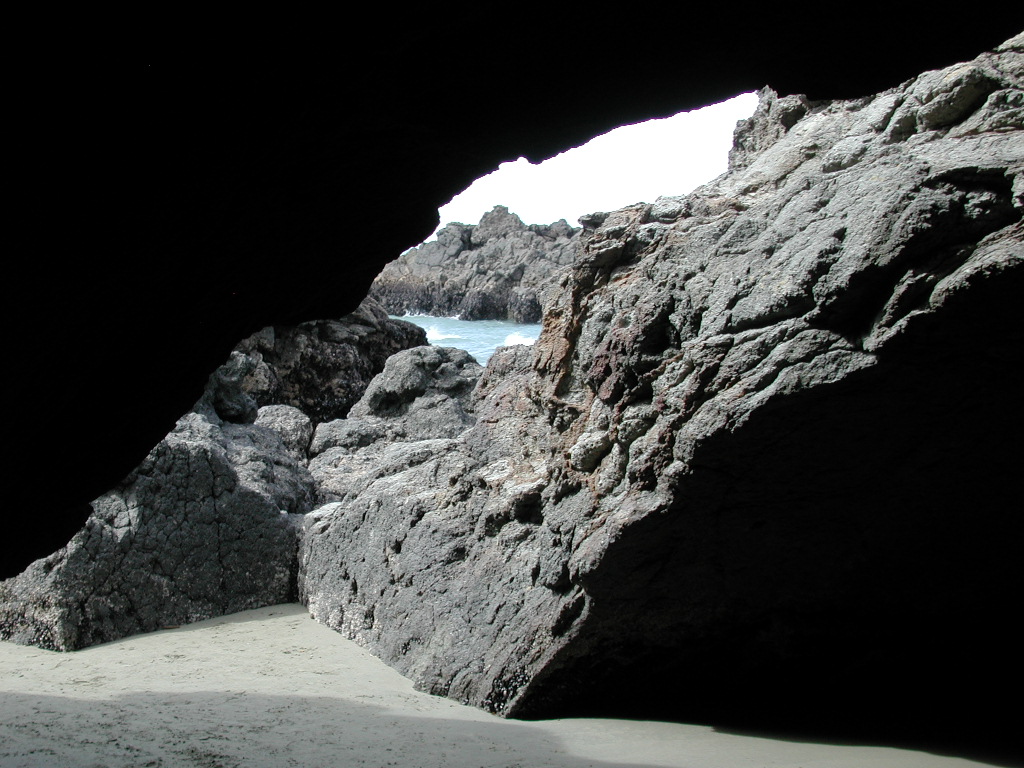
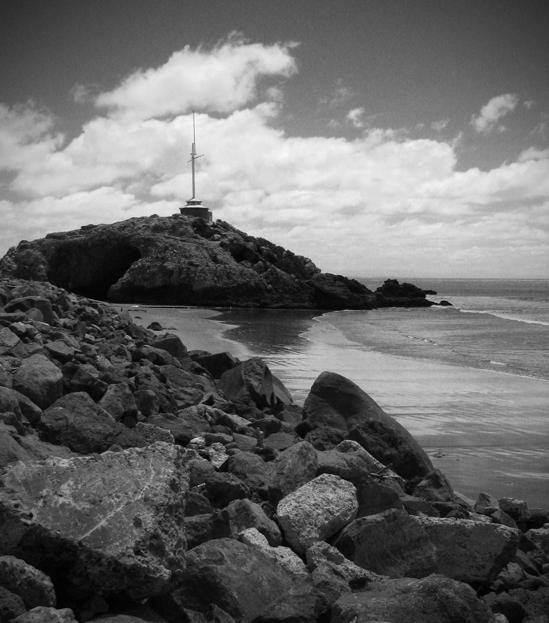
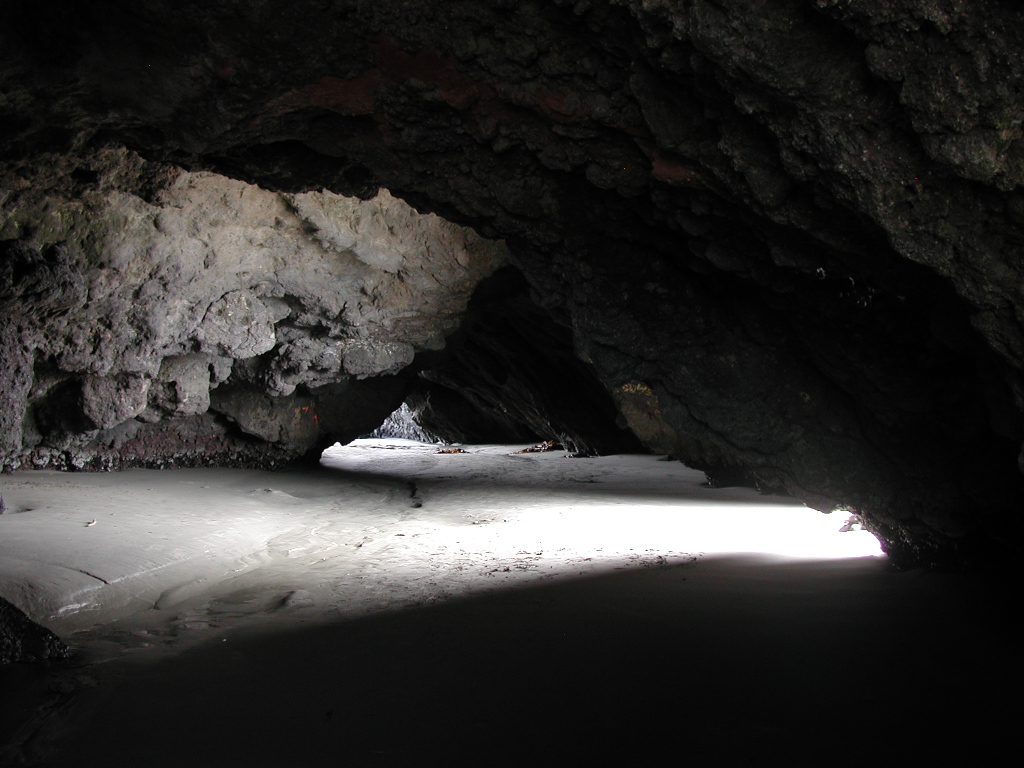
At low tide you can walk right through the middle of this rock on Sumner Beach, out the far side, and onto the promenade beyond. Most people just call it Cave Rock. Its Māori name, Tuawera, means cut down as if by fire, and comes from an old story: a chief named Tūrakipō was turned down by a woman called Hineao, cast a death spell on her, and was answered with a karakia from her father that ended with a whale washing up dead on the beach below. The rock, in the story, is what’s left of that whale.
Geologically it’s a leftover piece of the volcano that built Banks Peninsula, two layers of basalt lava with a band of tuff between them, worn into caves and tunnels by more than a million years of waves. A signal mast went up on top in 1864 to warn ships crossing the Sumner bar, and a stone building with a foghorn followed in 1898. Both were damaged in the 2011 earthquake and weren’t fully working again until the lights came back on in December 2021, a restoration that drew a few local complaints because the rebuilt mast looks a lot like a cross.
A small plaque near the top remembers Joseph Day, who captained the Sumner lifeboat and helped save dozens of lives between 1867 and 1897. The climb is short and steep but manageable for most people, and the view over the beach and the northern Port Hills is worth the five minutes it takes.
Park in the car park off Main Street and cross at the pedestrian lights, it’s a short walk from there to the rock. Check a tide table before you go: the walk-through cave only opens up for a couple of hours either side of low tide, and the water comes back in faster than it looks.
Photos: Nita (2) and Pseudopanax (2), via Wikimedia Commons.